As we move through 2026, a wave of new research from late 2025 has fundamentally shifted the conversation around VR safety training effectiveness. We are no longer asking if VR is effective for safety training; instead, the data is now telling us exactly how much more effective it is than traditional methods.
For operations leaders and safety directors, the argument has moved from “engagement” to hard operational metrics: accident reduction, speed-to-competence, and risk mitigation.
Below, we break down the key findings on VR safety training effectiveness from the latest industry studies.
Curious to learn more?
Dive into our infographic for in-depth insights!
Key Metrics: Measuring VR Safety Training Effectiveness
The latest data highlights a massive efficiency gap between immersive learning and traditional lectures.
-
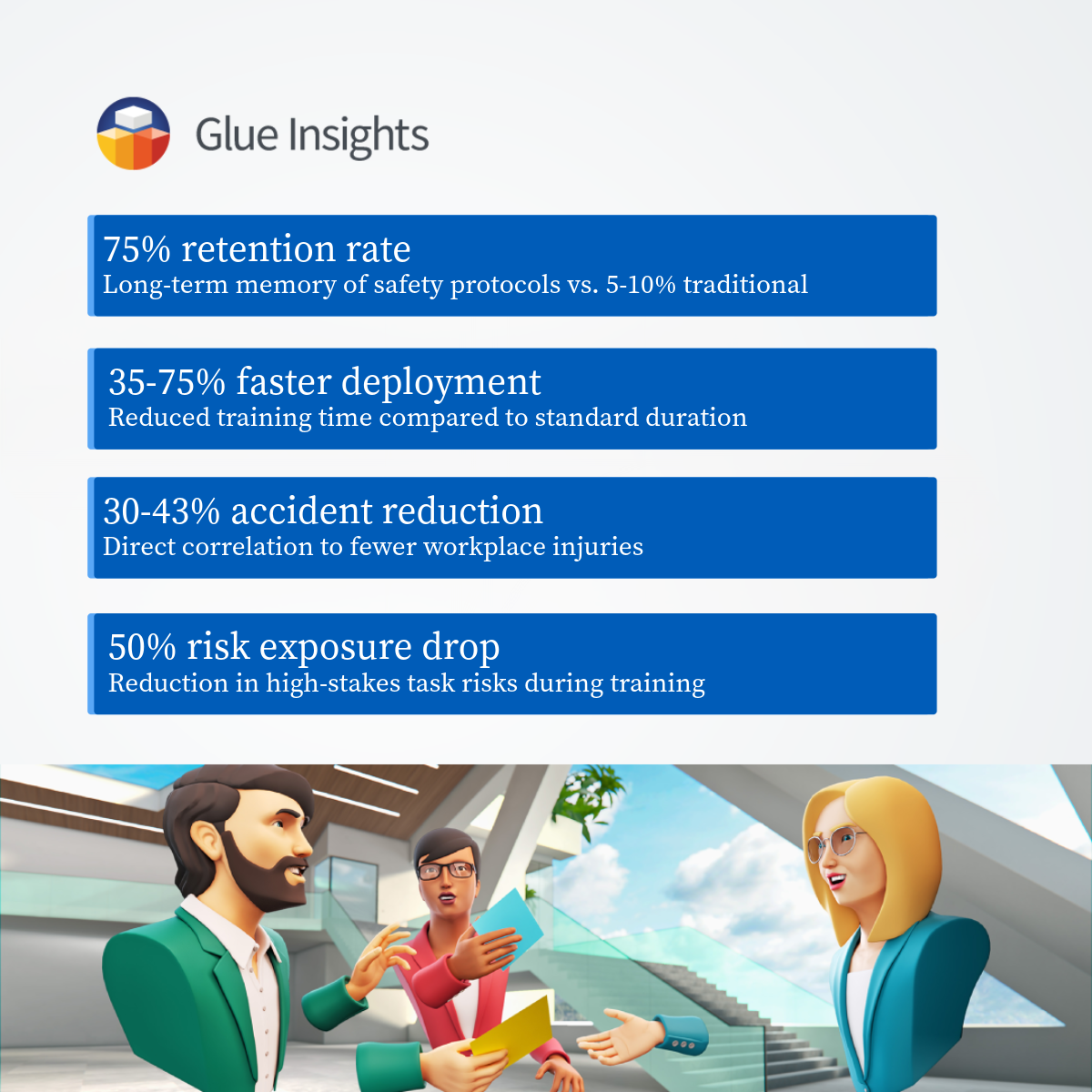
75% Retention Rate: Workers trained in VR retain significantly more safety protocols compared to the 5–10% retention typical of passive lectures.
-
43% Accident Reduction: Implementing VR safety training is correlated with a measurable drop in workplace injuries, proving its value as a risk management tool.
-
Faster Deployment: Organizations report reducing training time by 35–75%, getting skilled workers on the floor faster without sacrificing competency.
Why VR Outperforms Traditional Methods
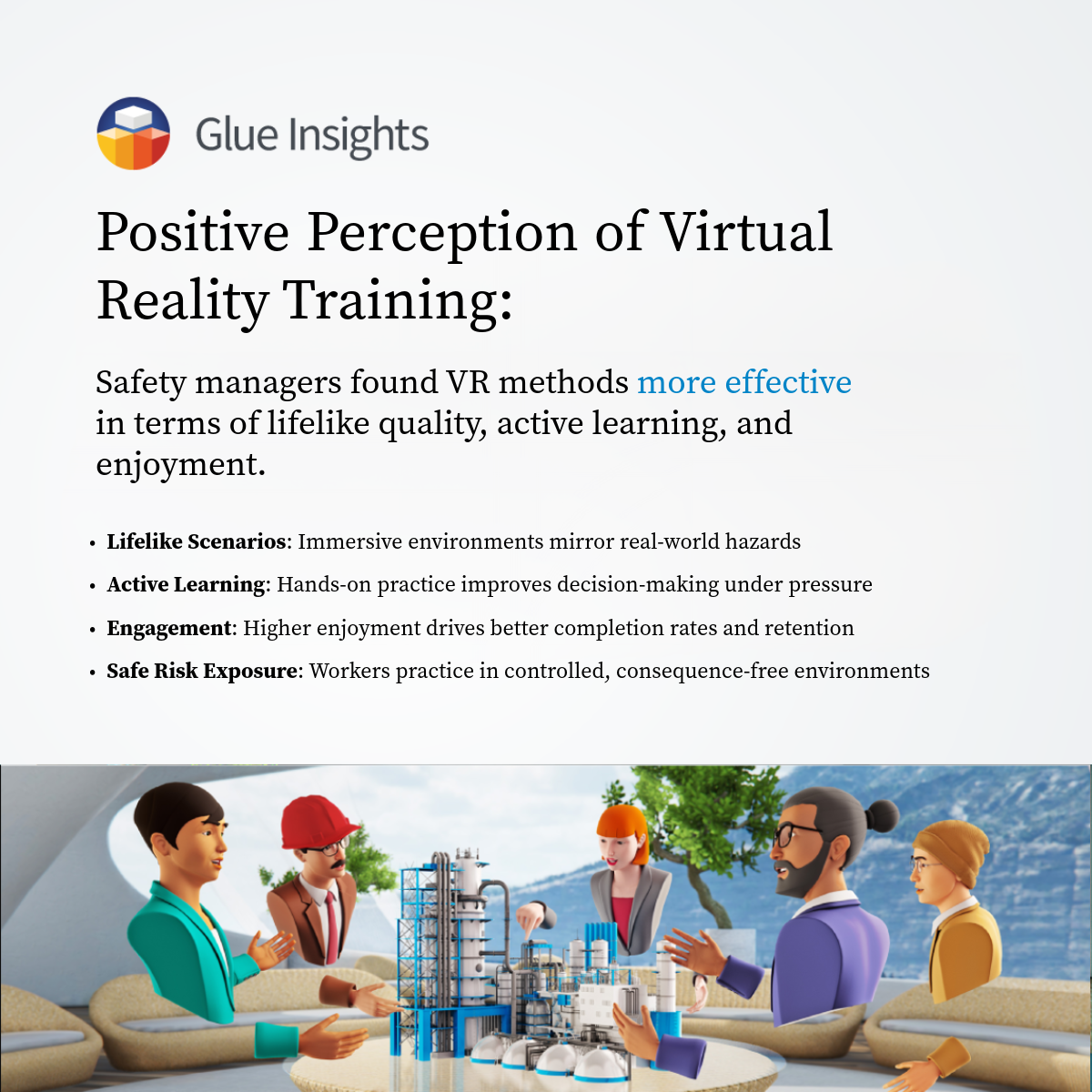
The core driver of VR safety training effectiveness is “active learning.” In a traditional classroom, a worker hears about a hazard. In VR, they experience it.
-
Zero-Risk Practice: Workers can make mistakes—like falling from height or mishandling high-voltage equipment—without physical consequences. This “safe failure” builds muscle memory that static videos cannot replicate.
-
Hazard Recognition: Studies from 2025 (cited below) show that VR-trained employees are significantly better at spotting anomalies in complex industrial environments.
Curious to learn more? Dive into our infographic below or read the detailed blog post for in-depth insights: Enterprise VR Safety: 2026 ROI Benefits